
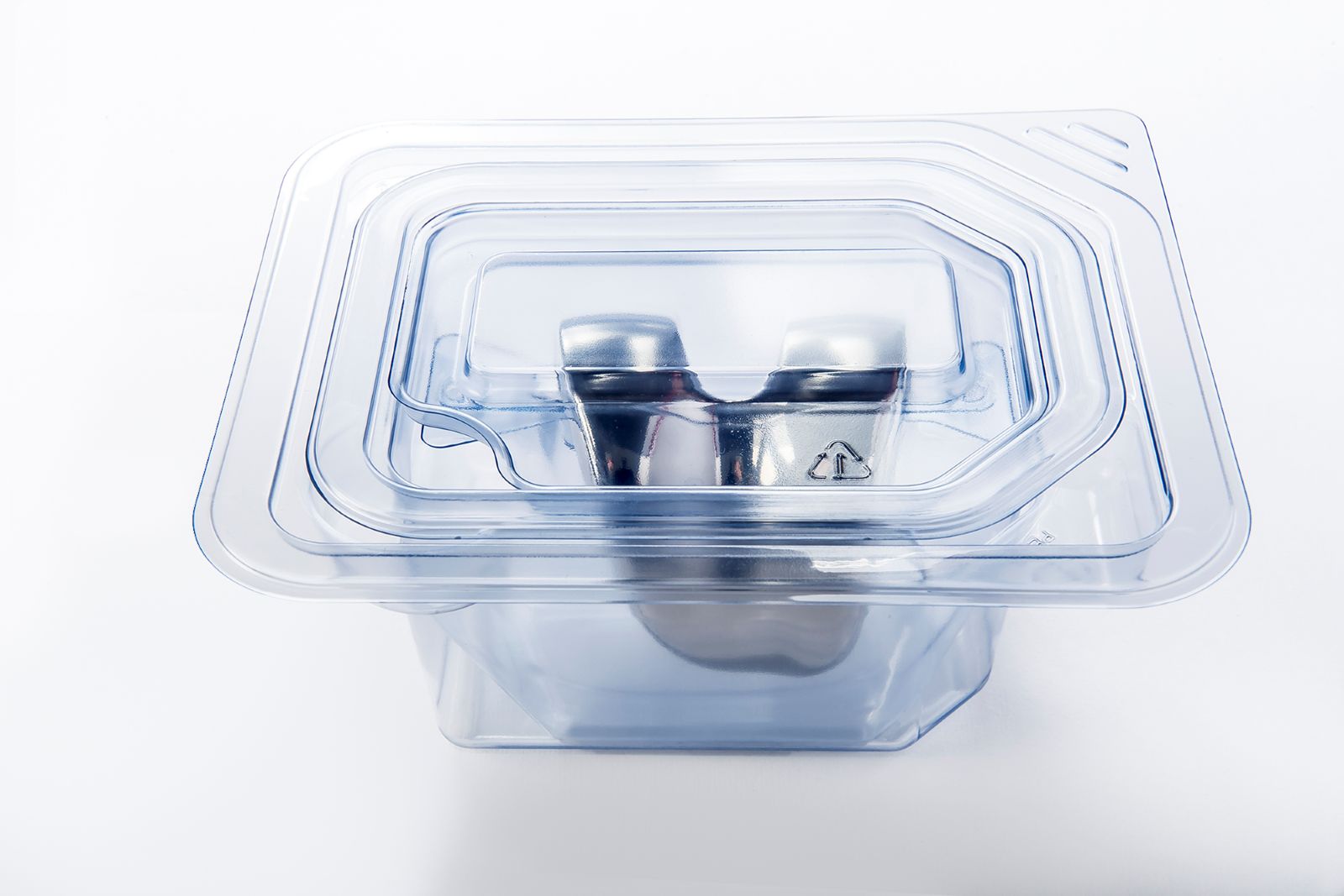
Orthopedic implant packaging must withstand two very different environments. First, it has to move through production, sterilization, storage, inventory handling, and the supply chain without losing packaging performance. Later, it has to work in a procedure room where a scrub tech, nurse, or surgeon may need fast identification, clean opening, and controlled transfer.
That second moment is easy to underestimate.
A hip liner, spinal cage, trauma plate, fusion device, or implant instrument may arrive in a package that passed lab testing, but the user still has to open it without confusion, excess force, product drop, sterility loss, or delay. For OEMs, innovative packaging for orthopedic implants begins with that full use case. It brings together sterile barrier design, labeling, and tray geometry. It also considers material behavior, human factors, inventory management, and the realities of the surgical workflow.
This article explains how OEMs can approach packaging design for medical devices in sterile orthopedics, with practical considerations for orthopedic implant programs and orthopedic device manufacturing. Rather than treating the package as the final step before release, it looks at packaging as part of device safety, usability, validation, and commercial readiness.
Why Orthopedic Packaging Design Starts in the Procedure Room
A useful orthopedic packaging discussion begins with the people who open the package under real clinical pressure. Orthopedic procedures often move quickly. Clinical teams may work with multiple implant sizes, trial components, backup options, and instrument sets during the same procedure. Packaging has to help them stay organized rather than slow them down. A package that hides the implant size, requires awkward peeling, or makes the product difficult to transfer can disrupt the clinical flow.
The medical device industry often discusses packaging as a compliance function. That is part of the work, but it is not the full story. Packaging also shapes the patient experience, even when the patient never sees the package. Better opening, clearer selection, and fewer handling steps can reduce friction for the clinical team. Those details can matter when the device is tied to medical necessity or surgical necessity.
Orthopedic packaging should answer several user questions quickly:
- What is the implant?
- What size or side is it?
- Is the package still sealed?
- How should it be opened?
- Where should the sterile item be presented?
- Is anything missing, damaged, or out of sequence?
Those questions turn package design into a usability issue. Human factors work is not limited to electronics, apps, or injection devices. It also applies to packaging cues, peel direction, and visual indicators, as well as how sterile packaging is transferred across the sterile field.
A strong package is quiet during surgery. The doctor sees what matters, opens it correctly, and moves on.
The Design Brief for Sterile Orthopedics
The packaging need for an orthopedic implant should be defined early, ideally when the implant concept is still being refined. Late decisions can create problems with tray geometry, labeling, and sterile barrier selection. They can also affect carton dimensions, sterilization planning, and shelf-life claims.
A useful design brief connects clinical use with commercial reality.
The design brief should cover the device, the user, and the business model. Market characteristics matter as well. Grand View Research reported that the global orthopedic devices market generated USD 60.4 billion in revenue in 2023 and projected it to reach USD 80.8 billion by 2030, with joint replacement and orthopedic implants accounting for USD 25.2 billion in 2023 revenue. That scale explains why response time, inventory control, and packaging standardization are business concerns, not just packaging details.
For an orthopedic implant packaging project, the design brief should define:
- Implant family, size range, and geometry
- Device classification and target markets
- Sterile or nonsterile status
- Sterilization methods, including EtO or gamma sterilization
- Design specifications for the sterile barrier system
- Labeling, UDI, and carton requirements
- Shelf life target
- Handling risks during packout and shipping
- Mechanical testing and distribution testing needs
- Operating room opening and transfer expectations
- Supply chain constraints and inventory management goals
This work also helps teams decide whether packaging solutions should be highly customized or built around a family platform. A platform approach can simplify inventory, reduce material variation, and support faster line changes. A custom package may be the better choice when the device has unusual mass, shape, coating, or presentation requirements.
Once those design inputs are clear, the next question is format: what combination of tray, pouch, carton, insert, or shipper can meet the full packaging need without adding unnecessary handling?
Packaging Format: Tray, Pouch, Carton, or System
Orthopedic implants often need a packaging system rather than one protective layer. The primary package may provide the sterile barrier. Secondary packaging may protect the barrier, carry labeling, or organize the item. Tertiary packaging supports distribution and pallet movement.
Orthopedic packaging rarely relies on a single component. Common formats include rigid trays and sealed pouches, often paired with cartons or protective inserts. Some programs also use double sterile barrier configurations or thermoformed packaging when the application requires additional protection.
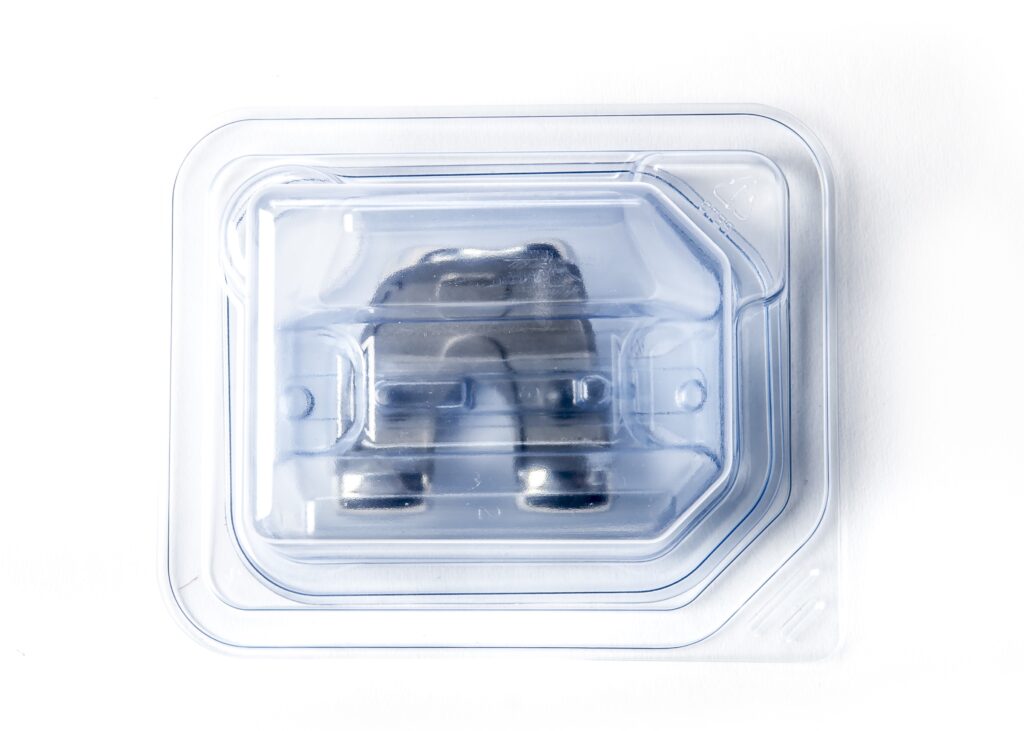
Orthopedic implant packaging often uses formed trays because many implants are heavy or have delicate surface finishes. Some are sharp, while others have textured coatings or highly polished surfaces that need additional protection. A tray can control orientation and limit movement. A pouch may work for smaller components, instruments, or accessories when puncture and abrasion risks are controlled.
For sterile spinal implants, trauma plates, screws, joint components, and fusion devices, the package has to do more than hold the part. It has to prevent contact between the implant and hard surfaces, reduce the risk of scuffing, and allow clean removal. Medical components with porous coatings or textured surfaces may need clearance from the lid and tray walls. Cross-linked polyethylene liners may need careful review of sterilization exposure, oxygen protection, and long-term material behavior. Research on ultra-high molecular weight polyethylene notes its long use as a bearing material in joint arthroplasty due to mechanical properties and wear resistance, which is one reason packaging and sterilization choices are reviewed closely for these components.
Some programs add inserts, tabs, retainers, or medical foams for stabilization. Other packages use thermoplastic polyurethane films, barrier lids, or nested trays. Protective features should be simple enough for repeatable assembly. A retainer that works in a design review can still create trouble if operators struggle to load it or if it hides a defect during inspection.
Format selection usually narrows the field, but it does not finish the design. The materials still have to match the implant, sterilization method, shelf life target, and regulatory file.
Material Selection and Sterility Barriers
Material selection affects device safety, sterile barrier performance, shelf life, sterilization compatibility, and regulatory documentation. It also affects cost and how the package feels to the user.
Orthopedic packaging uses a wide range of materials. Common options include PETG, HIPS, PP, and HDPE for trays and structural components. Medical-grade paper, Tyvek-style materials, foils, labels, adhesives, and protective foams are selected based on the sterile barrier and performance requirements. Some specifications may reference USP Class VI, ISO 10993, or other biological evaluation requirements for patient-contacting or device-contacting materials. Those terms should be reviewed against the actual use case rather than copied into a drawing without context.
ISO 11607-1 covers requirements and test methods for materials, preformed sterile barrier systems, sterile barrier systems, and packaging systems intended to maintain sterility of terminally sterilized medical devices until point of use. In practical terms, sterile barrier packaging has to work after sealing, sterilization, storage, distribution, and opening. A good first seal is only the beginning.
Sterility barriers should be selected with sterilization in mind. FDA notes that medical devices may be sterilized using moist heat, dry heat, radiation, ethylene oxide gas, vaporized hydrogen peroxide, and other methods. FDA also states that an EtO-sterilized device must be sealed in a carefully designed gas-permeable package that allows EtO gas to enter.
That choice changes the package. A breathable lid may support EtO. A foil pouch may improve moisture or oxygen protection. Gamma sterilization may affect polymers, adhesives, color, label stock, or packaging strength. Drug-eluting devices or products that combine device and drug functions may add more review because FDA defines combination products to include products made of drug/device, biologic/device, or other combined regulated components.
Material choices also need packaging process control. Seal parameters, tooling alignment, tray geometry, label placement, and inspection methods all affect performance. If the process creates nonconforming materials or recurring package defects, the root cause may sit in the material pairing, equipment settings, operator method, or design itself.
Material and process decisions eventually show up in the user’s hands, which is why usability features should be treated as part of the engineering work rather than a final cosmetic pass.
User-Centered Features That Help in Surgery
Packaging design for medical devices should account for how people actually open and handle the product. In orthopedic surgery, users may wear double gloves, work under time pressure, and manage multiple sizes on the back table. The package should reduce cognitive load.
Useful user-centered features may include:
- Clear implant size, side, and lot identification
- Large peel tabs that are easy to grip with gloves
- Color-coded seals for size families, laterality, or kit type
- Visual indicators that show tampering, opening direction, or sterile barrier status
- Tray features that present the implant without forcing removal
- Retention that holds the implant during shipping but releases smoothly during use
- Label placement that remains readable in storage and during setup
- Tamper-evident designs for security and confidence before opening
Human factors should be tested with real tasks. Ask users to identify the item, open the package, transfer the implant, and confirm the label. Watch where hands go. Watch what slows them down. Watch whether the package causes the implant to jump, stick, rotate, or drop.
Small changes can improve the experience. A deeper finger well. A larger peel corner. A matte surface that reduces glare. A tray cavity that allows force-free lift. A clearer label hierarchy. None of these changes are glamorous, but they can make sterile orthopedics easier to use.
Those refinements are most useful when they are backed by evidence. The package still has to satisfy regulatory expectations, validation requirements, and the documented risk profile for the device.
Regulatory Strategy and Validation
Orthopedic packaging exists inside a regulated product file. FDA regulations, European guidelines, ISO standards, and customer-specific regulatory requirements all influence package design.
FDA says device classification is risk-based, with Class I including devices with the lowest risk and Class III including those with the greatest risk. FDA’s regulatory-controls page states that Class II devices are subject to general controls and special controls, while Class III devices are subject to general controls and premarket approval. Orthopedic devices are also addressed in 21 CFR Part 888, which sets forth classifications for orthopedic devices intended for human use.
A useful example is the intervertebral body fusion device. Federal regulations classify certain intervertebral body fusion devices with bone grafting material as Class II with special controls, while devices that include any therapeutic biologic, such as bone morphogenic protein, remain Class III and require premarket approval. This kind of distinction can affect the evidence package, labeling, sterilization strategy, and packaging claims.
For EU market planning, Regulation (EU) 2017/745 is the main medical-device regulation, and packaging teams should align technical documentation with the applicable conformity assessment path and European guidelines.
Packaging validation may include:
- Seal strength and seal integrity testing
- Distribution simulation
- Mechanical testing of trays, inserts, and protective components
- Accelerated aging and real-time aging
- Post-sterilization inspection
- Label durability and readability checks
- Packaging performance after worst-case handling
- Packout process qualification
- Change-control review for alternate suppliers or materials
ASTM F1980-21 states that accelerated aging studies can screen for aging-related failure mechanisms in the sterile barrier system or medical device, and that real-time aging studies must run in parallel and continue to the claimed shelf life.
FDA clearance, PMA approval, or EU conformity review will not be well supported if packaging evidence is thin. Validation should be planned alongside product development rather than added after the implant design is complete.
Once validation needs are understood, the packaging team should also look beyond launch. Orthopedic systems often create long-term operational demands because many sizes, instruments, and replenishment patterns have to stay organized across the supply chain.
Supply Chain, Inventory, and Customer Service
Orthopedic implant packaging has to work beyond engineering and validation. It has to support the commercial model. Implant systems often include many SKUs, sizes, left/right options, trays, instruments, and replenishment patterns. A packaging system that creates too many unique materials can slow purchasing, increase obsolete stock, and complicate inventory management.
Supply chain planning should review:
- Common tray platforms across size families
- Labeling flexibility for multiple SKUs
- Carton dimensions and shipper efficiency
- Supplier lead times for formed trays, lids, foams, and labels
- Alternate material strategies
- Minimum order quantities
- Sterilization load planning
- Returns, field inventory, and consignment needs
- Customer service response time when demand shifts
Process Optimization often starts with packaging. A more stable tray family can reduce changeovers, while a clearer label scheme can reduce picking errors. Better carton design can also reduce freight damage, and validated alternate materials can improve supply resilience.
Sustainable packaging solutions can also be part of the review. For orthopedic implants, sustainability has to be balanced against sterile barrier requirements, device safety, shelf life, and validation burden. Reducing excess packaging is useful when it does not create new risk. Substituting materials needs more caution because a small change can affect sterilization, sealing, aging, or distribution performance.
Conclusion: Design the Package Around the Implant and the User
A package has to maintain sterility and protect the implant from damage. It also has to support fast, confident handling in the procedure room. Beyond the clinical setting, it should simplify inventory management, strengthen the supply chain, and help customer service teams respond efficiently.
The right packaging design for medical devices is not always the most complex format. It is the format that fits the device classification, sterility barriers, sterilization process, regulatory standards, shelf life, shipping route, and clinical use case.
For orthopedic OEMs, a packaging partner can help connect the implant, package, sterilization method, validation plan, and production workflow. That support may include review of medical packaging formats, thermoformed plastic packaging, pouching, tray sealing, labeling, material selection, inspection criteria, and packaging process control.
This is where PRO-TECH Design can support the work before packaging decisions become expensive to reverse. Orthopedic programs often move through several stages: prototype packaging, validation builds, sterilization planning, commercial packout, inventory scaling, and supplier change control. Each stage adds new constraints. PRO-TECH Design helps OEMs look at those constraints together rather than treating packaging as a late-stage task.
If your team is developing orthopedic implants packaging, reviewing sterile orthopedics requirements, or refining packaging design for medical devices before scale-up, PRO-TECH Design can help evaluate the path from package concept to validated production.
Contact us to discuss your orthopedic packaging needs, production goals, and validation plan.
FAQs
What Is Orthopedic Implant Packaging?
Orthopedic implant packaging is the packaging system used to protect, identify, sterilize, ship, store, and present orthopedic implants. It may include thermoformed trays, pouches, sterile barrier systems, cartons, labels, inserts, and protective materials. The design should match the implant geometry, sterilization method, shelf life, and surgical use.
What Does Orthopedic Implants Innovative Packaging Mean?
Orthopedic implants innovative packaging refers to package features that improve protection, usability, production control, or supply chain performance. Examples include better tray retention, clearer visual indicators, color-coded seals, tamper-evident designs, improved material selection, and packaging that supports faster identification in the operating room.
Why Is Packaging Design for Medical Devices Different From General Packaging?
Packaging design for medical devices has to support regulatory requirements, device safety, sterility barriers, labeling, cleanroom handling, sterilization methods, and validation. General packaging may focus mainly on protection and presentation. Medical packaging has to produce documented evidence that the package performs through its intended shelf life and use conditions.
What Makes Sterile Orthopedics Challenging?
Sterile orthopedics can involve heavy implants, sharp edges, textured surfaces, porous coatings, multiple SKUs, and strict opening requirements. The package must protect the implant, maintain sterile barrier protection, survive sterilization and shipping, and help clinical teams identify and transfer the device without unnecessary handling.
Which Materials Are Used in Orthopedic Implant Packaging?
Common materials include PETG, HIPS, PP, HDPE, medical-grade paper, nonwoven materials, foils, protective films, Medical Foams, and Thermoplastic Polyurethane Films. Some programs may specify USP Class VI, ISO 10993, or other biological evaluation references depending on device contact, market requirements, and regulatory strategy.
How Does Gamma Sterilization Affect Orthopedic Packaging?
Gamma sterilization can affect polymers, adhesives, labels, colorants, foams, and films. Packaging teams should review material compatibility before validation and inspect the package after sterilization exposure. For some orthopedic materials, such as cross-linked polyethylene components, sterilization and oxygen exposure may be part of the material review.
How Do FDA Regulations Affect Orthopedic Implant Packaging?
FDA regulations affect device classification, labeling, sterile barrier expectations, quality system controls, and the type of evidence needed for FDA Clearance or approval. Many orthopedic implants are Class II devices with special controls, while some Class III products require premarket approval. The exact path depends on the device, intended use, materials, and technology.
What Role Does Human Factors Work Play in Orthopedic Packaging?
Human factors work helps packaging teams understand how users identify, open, transfer, and dispose of the package. For orthopedic implants, this can affect peel-tab design, label hierarchy, tray grip points, visual indicators, and the way the implant is presented to the sterile field.
How Can Sustainable Packaging Solutions Fit Orthopedic Programs?
Sustainable packaging solutions may reduce excess material, improve carton efficiency, or support better inventory practices. Any change must be checked against sterile barrier performance, mechanical testing, sterilization compatibility, shelf life, and regulatory requirements. Sustainability should not weaken device safety or package validation.
How Can PRO-TECH Design Help With Orthopedic Packaging?
PRO-TECH Design can support custom orthopedic implant packaging design, medical packaging solutions, contract manufacturing, assembly, sterilization coordination, and packaging validation planning. Early review can help OEMs refine package design, reduce nonconforming materials, improve packaging process control, and prepare for commercial production.