
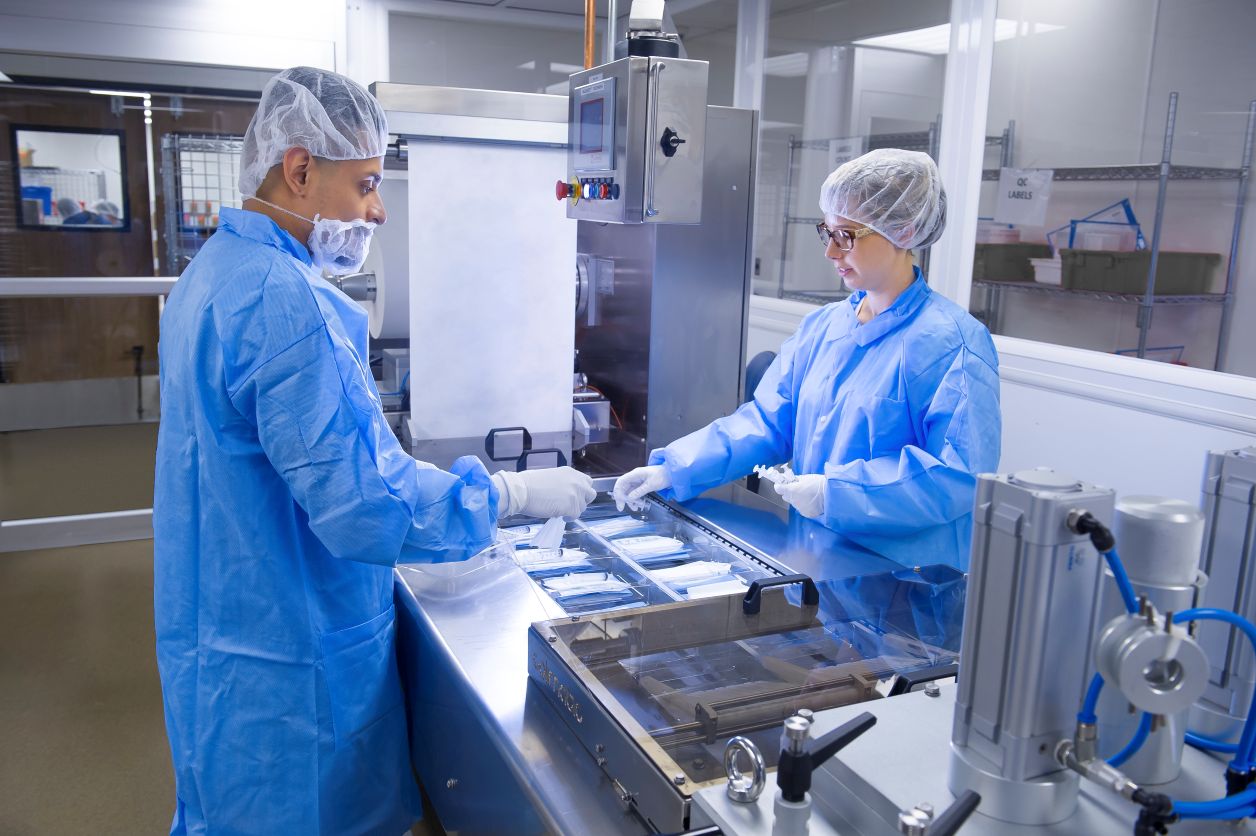
Automation in medical device manufacturing is often discussed as a way to increase output. That is true, but speed is only one part of the decision.
A useful automated system should make the process more repeatable. It should help operators handle products consistently, support inspection, improve documentation, and reduce avoidable variation. In regulated manufacturing, those details matter as much as throughput.
For medical device manufacturers, automation may support component feeding, micro-scale precision handling, adhesive or fluid dispensing, suture forming, needle drilling, kit assembly, heat sealing, labeling, testing, inspection, and final device packaging. Some programs need one automated station. Others need connected manufacturing lines that bring packaging machinery, label printers, inspection stations, and process data into one controlled workflow.
This guide explains how OEMs can evaluate medical device manufacturing automation, medical device assembly systems, automated medical device assembly equipment, and medical device automation systems without treating automation as a one-size-fits-all investment.
Why Automation Should Start Before Equipment Selection
Before an OEM evaluates a sealer, fixture, inspection cell, filling station, or software platform, the team needs to understand the product at production speed.
A soft catheter component behaves differently than a rigid connector. PCR tubes need different handling than implantable devices. Disposable pacing cables, drainage bags, disposable diagnostic consumables, and drug-coated stents all bring their own assembly and packaging needs.
Early review should define the device envelope, device tolerances, handling limits, inspection points, and acceptable contact surfaces. This is where product development and manufacturing planning need to overlap. When a device cannot be held, oriented, placed, filled, sealed, or inspected repeatably, automation teams may need to rethink fixtures, nests, grippers, tooling, or part features before equipment is purchased.
The main question is simple: can the process be made stable before it is automated?
A second question matters too: what role should people play in the automated process? In many medical device programs, the best answer is not full automation. It may be a semi-automated fixture, an assisted loading station, a validated sealing process, or a high-speed automation system for one repeatable step.
That early thinking helps OEMs match automation to the current stage and volume of the program.
Where Automation Fits in Medical Device Assembly
Once the team understands how the device behaves, the next step is to identify which assembly tasks create the most variation, labor strain, scrap, or inspection burden.
Medical device assembly systems can support one task or several linked operations. The right fit depends on risk, volume, cleanliness, labor availability, and the precision needed. Common automation opportunities include component feeding, material handling, fluid dispensing, leak testing machines, label printing, kit assembly, and packaging operations.
Inspection is often part of the same discussion. Vision systems can confirm part presence, orientation, alignment, label placement, fill level, or defect conditions. Sensor integration can add force, pressure, vacuum, flow, temperature, or position data to the production record.
Complex assembly benefits from automation when the process has many repeatable steps, tight orientation requirements, small parts, or frequent inspection points. A machine can keep placement, force, distance, timing, and cycle sequence consistent in ways that are hard to hold manually over long production runs.
Still, automation should earn its place. Products that are still changing during development may be better served by controlled manual assembly or assisted fixtures until the design, instructions, components, and acceptance criteria settle.
The Technology Stack Behind Medical Device Automation Systems
Medical device automation systems often combine mechanics, fixtures, sensors, inspection, software, testing, and operator interfaces. Each layer has to be selected for the device and the process.
Motion, Fixtures, and Positional Repeatability
Repeatable movement is the foundation of an automated process. Positional repeatability matters when a component must be placed into a small cavity, aligned with a connector, dispensed onto a narrow bond line, or moved through a cleanroom process without surface damage.
Fixtures and nests are just as important as the equipment around them. They define how the device is supported, how much movement is allowed, and whether the operator or machine can confirm correct placement. Weak fixturing can make expensive automated assembly equipment perform poorly.
Machine Vision, Sensor Integration, and Data
Inspection deserves its own role in the automation plan because many device defects are small, fast-moving, or difficult for operators to judge consistently. Machine vision can inspect presence, absence, orientation, color, shape, print quality, fill level, and part position. Vision inspection systems can reduce reliance on subjective checks, especially when cycle times are short.
Sensors add another layer of control. Force sensors, flow meters, pressure sensors, vacuum sensors, temperature probes, encoders, and laser sensors can feed process data into a process control center. AI dashboards and artificial intelligence tools may help summarize trends or flag drift, but the data still needs to be reliable.
Automation should help quality control see the process more clearly. It should not hide weak process understanding behind a polished screen.
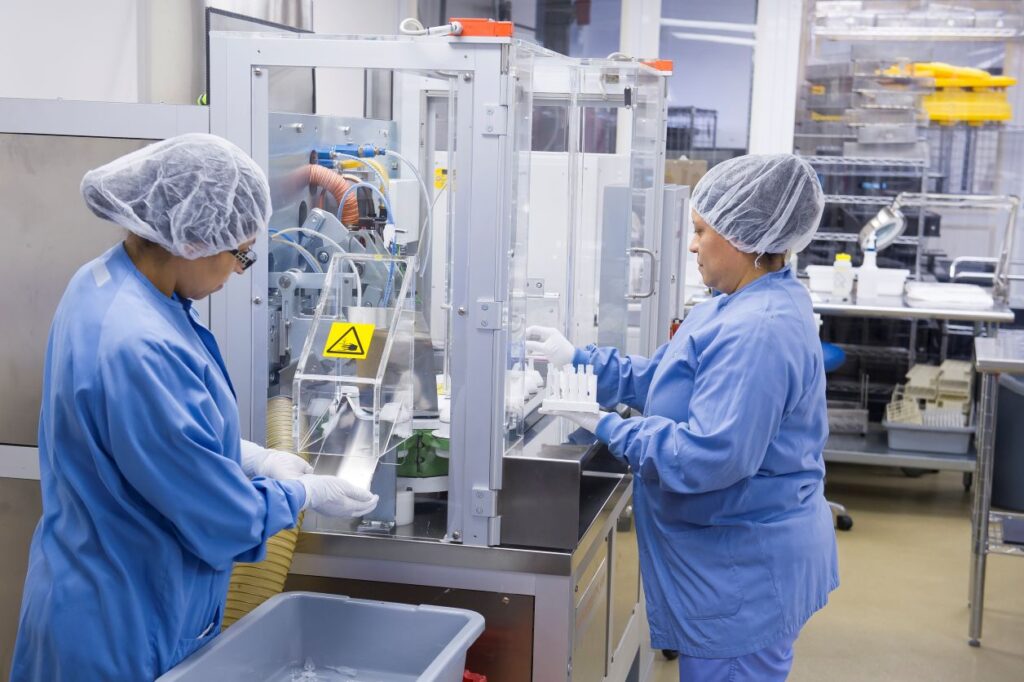
Automation in Device Packaging and Sterile Barrier Packaging
When assembly becomes repeatable, device packaging is often the next place to improve control.
For sterile barrier packaging, automation has to respect ISO 11607. ISO 11607-1 specifies requirements and test methods for materials, sterile barrier systems, and packaging systems intended to maintain sterility of terminally sterilized medical devices until the point of use. ISO 11607-2 covers validation requirements for forming, sealing, and assembly processes for terminally sterilized medical device packaging.
Automated packaging operations may include:
- Form-Fill-Seal manufacturing
- Bar sealing for pouches or header bags
- Tray sealing for rigid or semi-rigid sterile packages
- Heat sealing process control for temperature, pressure, dwell, and alignment
- Vision inspection systems for seal area, label placement, and component presence
- Leak testing machines for selected packages or assemblies
- Label printers tied to lot, UDI, batch, or work-order data
- Automated reject handling for missing parts, bad labels, or failed inspections
These steps should be planned with validation in mind from the beginning. A faster sealer, loader, or inspection station still has to produce packages that perform after sterilization, aging, distribution, and handling.
Cleanroom standards also affect automation choices. ISO 14644-1 specifies cleanroom and clean zone air-cleanliness classification by airborne particle concentration. Equipment intended for ISO Class 7 and 8 cleanroom environments should be reviewed for materials, lubricants, particle generation, maintenance access, cleaning approach, and operator flow.
Where Form-Fill-Seal Fits
Form-fill-seal deserves special attention because it is one of the most common automation paths in medical device packaging. It can reduce manual handling, improve sealing consistency, and support higher-volume production when the device and package format are stable.
In a form-fill-seal process, packaging material is formed, the device or component is loaded, and the package is sealed in a controlled sequence. Depending on the product, this may support flexible pouches, semi-rigid cavities, thermoformed trays, or other packaging solutions.
Form-fill-seal can be a strong fit when a device has predictable demand, repeatable loading requirements, and stable package dimensions. It can also help when production lines need better throughput without adding extra cleanroom handling steps.
The limitation is flexibility. If the device, label, accessory set, or package size is still changing, form-fill-seal may create avoidable rework. OEMs should review device tolerances, package geometry, material selection, heat sealing process controls, and inspection points before committing to a form-fill-seal approach.
For PRO-TECH Design, this is a practical automation category because it connects directly to sterile barrier packaging, device packaging, production efficiency, and packaging validation.
Product Types That Can Benefit From Automation
Because automation is task-driven, it can support a wide range of product families rather than one narrow category. The same principles can apply to diagnostics manufacturing, lab automation, implantable products, disposable assemblies, and packaging solutions for clinical or commercial supply.
Disposable diagnostic consumables, test kits, PCR tubes, and assay components may need high-speed automation systems because annual volume is high. Implantable medical devices may require slower micro-scale precision handling with more inspection. A diagnostic cartridge may need fluid dispensing, leak testing, camera inspection, and serialized packaging in one workflow.
Other examples include wearable devices, endoscopic device assemblies, ophthalmic products, vision care devices, fluid management systems, drainage bags, tubing sets, injection devices, parenteral drug delivery tools, disposable pacing cables, and electromechanical assemblies.
The product label matters less than the process. If the task is repeatable, measurable, and stable, automation may be useful. If the process is still changing, a staged approach is usually safer.
Quality, Documentation, and Regulatory Compliance
Automation does not remove regulatory responsibility. It changes where control lives.
In a manual process, control often depends on trained operators, work instructions, inspection steps, and batch records. In an automated process, control shifts toward recipes, fixtures, software permissions, sensors, alarms, calibration, preventive maintenance, process limits, and electronic records.
ISO 13485 is the internationally recognized standard for quality management systems in the design and manufacture of medical devices. In the United States, FDA’s Quality Management System Regulation governs the methods, facilities, and controls used for design, manufacture, packaging, labeling, storage, installation, and servicing of finished devices.
For automation projects, regulatory compliance depends on documented control. Teams should define:
- User requirements and process requirements
- Equipment specifications
- Software and recipe controls
- Installation, operational, and performance qualification needs
- Calibration and preventive maintenance plans
- Alarm handling and reject handling
- Change control for fixtures, programs, sensors, and tooling
- Training requirements for operators, technicians, and quality staff
- Data review, retention, and traceability expectations
Automated medical device assembly equipment should make evidence easier to collect. It should record what happened, when it happened, and whether the process stayed within defined limits.
When Automation Makes Business Sense
Automation is most useful when it solves a defined production or quality problem. The problem might be rising labor demand, inconsistent manual placement, ergonomic strain, limited cleanroom capacity, slow inspection, high scrap, or a need to scale from pilot builds to mass production.
It may be time to evaluate automation when production lines cannot meet demand with current staffing, manual variation is causing rework, inspection is too subjective, or packaging output is limited by loading, sealing, labeling, or inspection speed. Automation may also help when medical device companies need better traceability across lots, labels, and test data.
The business case should include more than machine cost. Floor space, cleaning, validation, training, tooling, changeover time, maintenance, spare parts, scrap reduction, yield improvement, quality data, and future product variants all matter.
Automation is sometimes best introduced in phases. A fixture may come first. Then a semi-automated station. Then machine vision. Then robotic material handling. Later, a connected line may link assembly, testing, labeling, and packaging into a larger automated system.
A Practical Roadmap for Automation Projects
Once the need is defined, a phased roadmap keeps the project from becoming an equipment purchase based on weak assumptions. Rushing into a full production line can lock in the wrong gripper, feeder, fixture, inspection method, or software structure.
A workable roadmap often looks like this:
- Map the process. Identify each manual step, decision point, inspection, wait state, and handoff.
- Define the product risk. Review device tolerances, contact limits, cleanliness needs, and failure modes.
- Choose the automation level. Decide whether the program needs an assisted fixture, a semi-automated workcell, form-fill-seal packaging automation, or a fully connected line.
- Build around inspection. Add machine vision, sensors, leak testing, and reject handling where the process needs proof.
- Plan for cleanroom use. Review cleanroom standards, cleaning access, materials, maintenance, and line clearance.
- Validate the process. Connect equipment qualification, software controls, packaging validation, and production records.
- Scale with discipline. Use lessons from pilot runs before moving toward higher-volume manufacturing lines.
This staged approach is useful for new products and existing lines. It also helps OEMs avoid over-automating a process that is still changing during product development.
Conclusion: Build Automation Around the Process
Automation in medical device manufacturing works best when it is tied to the process rather than the machine. The strongest projects begin with a stable device design, known handling risks, defined inspection needs, cleanroom requirements, and a clear production target.
Medical device manufacturing automation can support assembly, device packaging, sterile barrier packaging, inspection, testing, labeling, and data collection. It can also help OEMs scale from clinical trials to mass production when the process is ready for that step. The right path may be a small assisted fixture, a semi-automated station, or end-to-end automated manufacturing systems.
At PRO-TECH Design, we support OEMs that need practical automation planning for medical device packaging, assembly, inspection, and validation. As an ISO 13485-certified contract manufacturing organization, PRO-TECH Design helps teams evaluate where automation can improve repeatability, reduce handling, support cleanroom workflows, and strengthen quality control without adding unnecessary complexity.
That support can be especially useful when a program is moving from product development or clinical trials into higher-volume production. Automation decisions made too early can lock a team into the wrong tooling. Waiting too long can create capacity, inspection, or validation problems. The best timing sits between those points: after the process is understood, but before production constraints become expensive.
If your team is evaluating automation in medical device manufacturing, we can help review your assembly flow, device packaging needs, sterile barrier packaging requirements, cleanroom environment, inspection points, form-fill-seal opportunities, and validation plan.
Contact us today to discuss your production goals and automation opportunities.
FAQs
What Is Automation in Medical Device Manufacturing?
Automation in medical device manufacturing refers to the use of equipment, robotics, sensors, software, packaging machinery, inspection systems, and data tools to perform or support production tasks. It can apply to assembly, testing, labeling, packaging, cleanroom handling, and quality control.
What Is Medical Device Manufacturing Automation Used For?
Medical device manufacturing automation is used to improve repeatability, increase throughput, reduce manual handling, support inspection, collect process data, and scale production. It may support diagnostics manufacturing, lab automation, implantable devices, disposable consumables, wearable devices, and sterile packaging operations.
What Are Medical Device Assembly Systems?
These systems bring together the tools, fixtures, motion equipment, inspection devices, and controls needed to assemble medical devices. They may include feeders, collaborative robots, dispense fluid systems, laser integration, machine vision, leak testing machines, and automated material handling.
What Is Form-Fill-Seal in Medical Device Packaging?
Form-fill-seal is an automated packaging process that forms the package, loads the product, and seals the package in a controlled sequence. In medical device packaging, it can support sterile barrier packaging, reduce handling, and improve repeatability when the product and package format are stable.
What Counts as Automated Medical Device Assembly Equipment?
This category can include pick-and-place systems, indexing dial machines, heat sealing systems, tray sealing systems, bar sealing equipment, suture forming stations, needle drilling equipment, label printers, test stations, and vision inspection systems. The right equipment depends on device tolerances, volume, cleanliness, and inspection needs.
Can Automation Be Used in Cleanroom Environments?
Yes. Automation can be used in cleanroom environments, including ISO Class 7 and 8 areas, when the equipment design supports cleanliness, maintenance access, material compatibility, cleaning, and contamination control. Equipment should be reviewed against the device, process, and cleanroom standards.
How Does Automation Support Sterile Barrier Packaging?
Automation can make sterile barrier packaging more repeatable through controlled loading, bar sealing, tray sealing, heat sealing process control, label verification, visual inspection, and reject handling. The process still needs validation under ISO 11607 and related internal quality requirements.
How Do Vision Systems Improve Medical Device Quality Control?
Vision Systems and vision inspection systems can check part presence, orientation, label placement, print quality, fill level, seal area, defects, and alignment. They help reduce subjective inspection and can feed data into a Process Control Center or AI dashboards.
When Should OEMs Automate Medical Device Packaging or Assembly?
Automation is worth evaluating when manual processes create variation, production lines cannot meet demand, inspection is too slow, cleanroom capacity is limited, or production is moving toward mass production. It can also help when product components require micro-scale precision handling or tight positional repeatability.
How Can PRO-TECH Design Help With Automation Planning?
PRO-TECH Design can help OEMs review assembly flow, device packaging, sterile packaging needs, cleanroom environments, inspection points, validation requirements, and form-fill-seal opportunities. That review can help identify whether automation solutions, semi-automated fixtures, custom packaging processes, or broader medical device automation systems fit the program.