
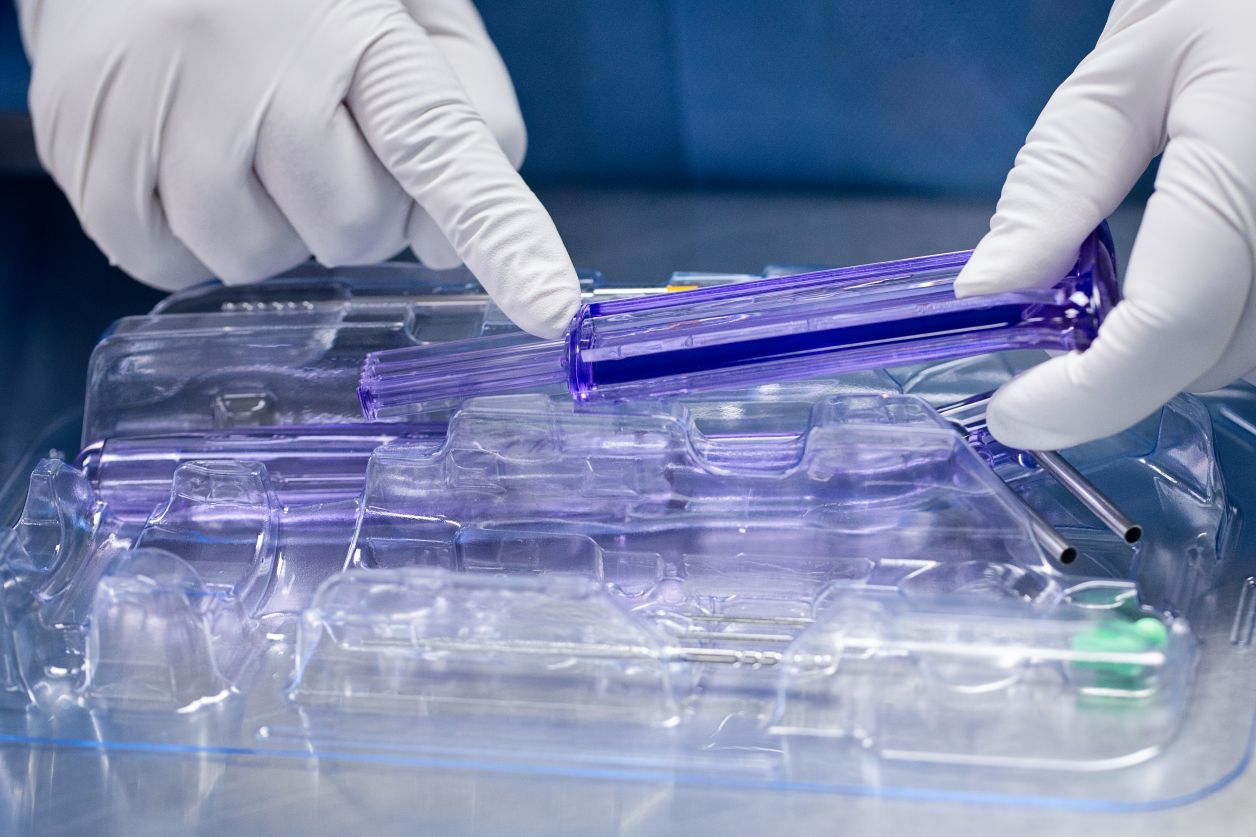
A device can leave a cleanroom in perfect condition and arrive at a hospital unusable. Nothing about the device changed. The package did. A pinhole opens in a pouch corner after twelve hours on a pallet. A lid seal fatigues on a cold loading dock in Minneapolis. A tray cracks under the weight of three cases stacked above it. The barrier fails quietly, and nobody finds out until someone opens it in a procedure room.
That gap between “sterilized” and “sterile at the point of use” is where most packaging work actually lives. Sterilization is a process with a validated outcome. Keeping that outcome intact across a warehouse, a truck, a cargo hold, a distributor, and a stockroom shelf is a separate engineering problem, and it deserves separate attention.
This guide walks through the material, sealing, testing, and validation decisions that close that gap — and if you would rather work through your specific configuration with an engineer, our contract packaging team is a good place to start.
Sterility Has to Survive the Entire Trip
A device labeled sterile has to maintain its barrier through its specified processing, storage, handling, and distribution conditions until the point of use or the end of its established shelf life.
Consider what that system absorbs. Forklift vibration at resonant frequencies that can stress a seal. Compression from stacking. Drops at conveyor transfer points. Pressure differentials during air freight. Humidity swings between a Texas distribution center and a Boston hospital in February. Each of these becomes a load case to evaluate before a product ships.
The consequences of getting it wrong are real. A compromised sterile barrier creates a contamination risk in clinical environments already working hard to prevent healthcare-associated infections. Packaging failures also force last-minute case cancellations, generate complaints, and lead to recalls and corrective actions. Patient safety sits at the end of every one of these decisions.
The Packaging System and the Sterile Barrier System
These two terms get used interchangeably, and they should not be. ISO 11607 draws a firm line between them, and understanding that line clarifies most downstream decisions.
The sterile barrier system is the minimum package that maintains sterility and permits aseptic presentation — a sealed pouch, or a tray with a lidding material. That is the layer doing the microbiological defense work.
Protective packaging is everything wrapped around it that prevents physical damage: cartons, foam inserts, corrugated shippers, dunnage, etc.
Together they form the packaging system. Most problems traced back to root cause turn out to be a mismatch between the two, usually a barrier designed well and protection designed as an afterthought.
Single Barrier or Double Barrier
A single barrier uses one sterile barrier system. It may be appropriate when one validated barrier adequately addresses product protection, sterility, and aseptic presentation requirements.
A double barrier places one sterile barrier system inside another. If the outer layer is damaged while the inner barrier remains intact, the device may still retain its sterile protection. This configuration also supports aseptic transfer, where a circulating nurse opens the outer layer, and a scrubbed team member handles the inner package.
Implants, surgical instruments, and other devices used within a sterile field often benefit from a double-barrier configuration, but the choice should not be automatic. The decision belongs in a documented risk assessment tied to intended use, clinical setting, presentation method, and the consequence of package failure. It should never default to “what we did last time.”
Material Considerations That Shape Everything Downstream
Material Considerations come early because they constrain every choice that follows: the sterilization method, the sealing methods, the shelf life claim, and the testing protocol.
What the Material Has to Do
Any candidate for medical device sterile packaging carries several jobs at once. It has to form and maintain a microbial barrier. It has to survive sterilization without unacceptable degradation. It has to tolerate distribution stresses. And it has to open cleanly and predictably when a gloved hand pulls it apart under time pressure.
Evaluation covers both physical properties and chemical properties. Physical testing examines tensile strength, puncture and tear resistance, burst behavior, and porosity measured through air permeance testing on breathable webs. Chemical evaluation addresses compatibility with the device, adhesives, coatings, inks, and exposure to radiation or gaseous sterilants.
Raw Materials and Resin Choices
Specifying resin for thermoformed components gives greater control over material history and consistency when the specification calls for it.
Raw materials traceability matters as much as the material itself. Resin, film, paper, coatings, and other components should be controlled through supplier records and specifications, with traceability carried through conversion operations and production.
Common material families include:
- Medical-grade paper and nonwoven webs — breathable materials used where the sterilization process and package design support them
- Plastic composites — multilayer films engineered for barrier, seal, puncture, and mechanical performance
- Thermoformed trays and rigid container systems — dimensional support for heavy, delicate, or complex devices
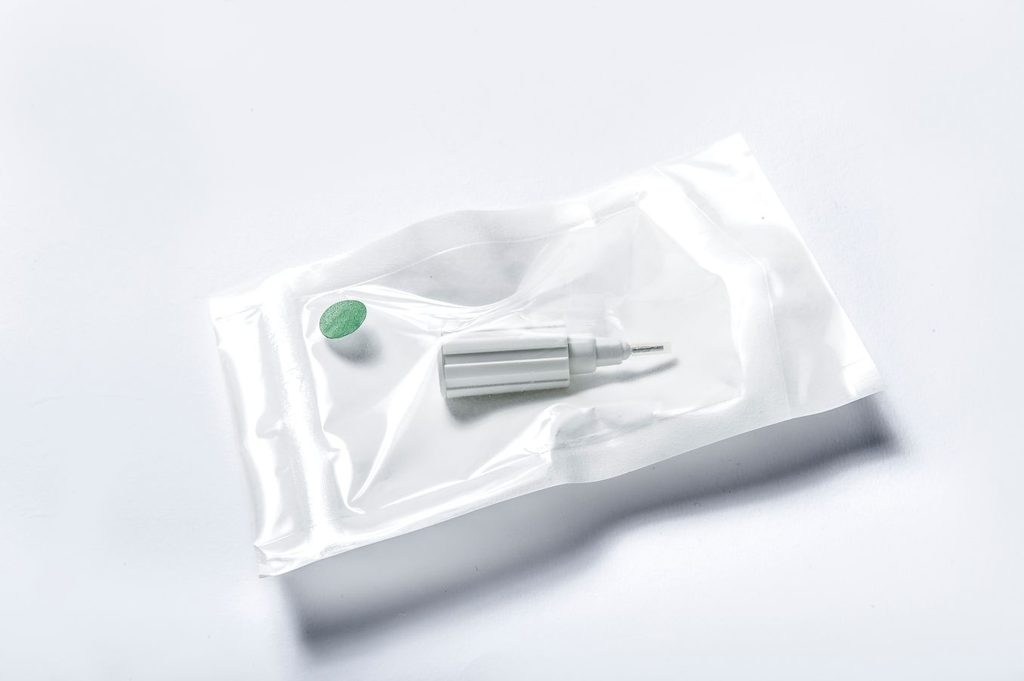
- Sterilization pouches — paper-film, nonwoven-film, and similar constructions used across a range of sterile applications
Packaging Formats in Practice
Among available packaging formats, the flexible peel pouch is a common choice for small to mid-size devices: low tooling requirements, efficient changeover, clear visibility with transparent materials, and controlled peel performance when properly designed and sealed. Its limitation is structural. A flexible pouch offers less resistance to crushing or puncture than a rigid package, so protective packaging has to carry more of that load.
Thermoformed trays with lidding go the other way. They require more tooling investment but deliver better device immobilization and a stable opening geometry that supports controlled aseptic presentation. Rigid container systems extend that logic for instruments and kits needing greater physical support.
Chevron-sealed pouches, header bags, and form-fill-seal webs all have their place. The format follows the device, not the other way around. Getting that match right early is one of the main reasons packaging design belongs alongside device development.
Matching Packaging to the Sterilization Method
The sterilization method and material selection have to be evaluated together. Choosing one without the other leads to expensive rework.
Ethylene oxide gas sterilization requires a configuration that permits sterilant penetration and subsequent aeration, which is why breathable barrier materials are standard here. The complete package still has to be qualified for the specific EO process.
Gamma radiation penetrates sealed packaging and works with many nonporous systems, though radiation can embrittle or discolor certain polymers. Dose, material formulation, package density, and load configuration all affect the outcome.
Electron beam also uses ionizing radiation but generally has lower penetration depth than gamma, so package density and load configuration determine whether it is appropriate. Materials still need evaluation for changes in strength, appearance, seal behavior, and barrier performance after exposure.
Heat sterilization, whether moist steam or dry heat, is limited to materials and devices that tolerate the thermal load. Many polymers, adhesives, and electronic assemblies have temperature or moisture limitations.
Low-temperature oxidative processes, including vaporized hydrogen peroxide and chlorine dioxide, suit certain devices with sensitive components. Each carries its own compatibility rules, including possible limitations around cellulosic or absorbent materials.
For terminally sterilized medical devices processed in final packaging, every material in the sterile barrier system has to remain fit for its intended function afterward. Compatibility has to be demonstrated for the actual process being used. Coordinating that work is part of what our sterilization services team handles.
Conversion Operations, Sealing Methods, and the Parameters Behind Them
Material selection gets most of the attention. Sealing is where failures become visible.
Integrity problems frequently originate at the seal, and seal problems usually trace back to parameters, material variation, or equipment conditions drifting outside the established process window. Heat sealing, impulse sealing, and other joining technologies each bring different variables, and each requires a characterized process.
Form-fill-seal equipment handles forming, loading, and sealing as an integrated operation. Throughput is high. The trade-off is that the process window has to be tightly controlled, because a shift in an important input can affect a large quantity of product before anyone notices.
Sealing operating parameters worth establishing and monitoring:
| Parameter | Why It Matters |
| Temperature | Too low leaves incomplete fusion, too high burns through the web |
| Dwell time | Controls how long material stays molten enough to bond |
| Pressure | Drives intimate contact across the full seal width |
| Tooling condition | Worn or contaminated jaws create channels and thin spots |
| Material lot | Coating weight varies between lots and shifts the window |
A validated seal process defines the acceptable range for each relevant parameter and demonstrates that a product made within that range meets acceptance criteria. That is what separates a characterized process from one that happens to be working today.
Seal strength and peel behavior are measured outcomes, not assumptions. Peel strength testing using ASTM F88/F88M measures the force required to separate a test strip containing the seal and identifies the failure mode. A weak seal is vulnerable during distribution. Excessive opening force tears the substrate, produces fiber tear, or makes controlled presentation difficult. The target is a defined performance range, supported by data showing the process stays inside it.

Package Integrity Testing: Proving the Barrier Holds
Package integrity testing addresses a direct question: does the package contain a breach or leak path that matters to its intended barrier performance? Methods can be destructive or non-destructive, and most programs use more than one depending on package design and identified failure modes.
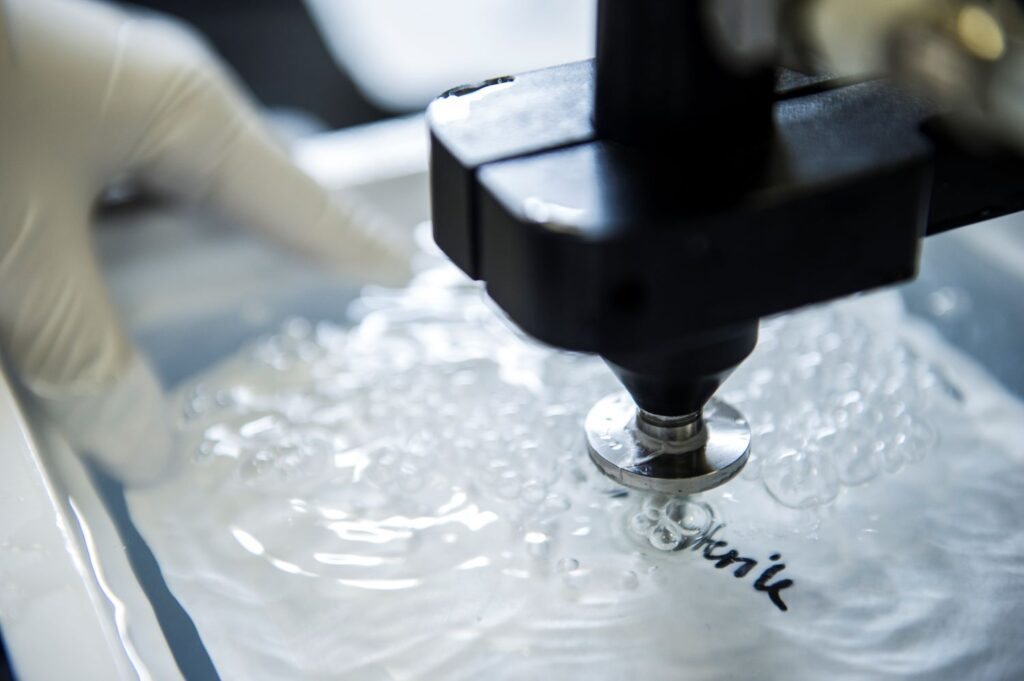
Bubble emission testing under ASTM F2096 uses internal pressurization and immersion to identify gross leaks. It is fast, needs modest equipment, and reliably finds substrate holes and open channels within the method’s scope. It is a gross-leak method rather than a fine microleak test.
Dye penetration testing under ASTM F1929 applies a low-surface-tension dye solution to applicable seals and looks for dye movement through a channel in the seal path. The method is designed for edge seals formed between a transparent material and a porous sheet. It locates the defect, which makes it valuable during root-cause work, and it destroys the sample.
Ultrasonic inspection technology offers a non-destructive way to evaluate certain seal-quality variations, including voids, channels, and areas of inconsistent bonding. Depending on the technology and package configuration, it can support higher sampling rates or automated inspection.
Additional package integrity tests and related evaluations in common use:
- Visual inspection using ASTM F1886 against defined acceptance criteria
- Burst and creep testing using ASTM F1140 and F2054 for package and seal response under internal pressure
- Vacuum decay using ASTM F2338 for suitable package configurations
- Air permeance testing to characterize breathable packaging materials where porosity is a specified attribute, rather than as a direct package leak test
No single method covers every failure mode. A sound program selects tests according to package construction, expected defects, method capability, and the risk associated with a loss of integrity.
Device Transportation Testing: Simulating the Real Route
Here is where the whole packaging system gets its verdict.
Device transportation testing subjects the packaged product to a simulated distribution environment and then verifies that both the device and the sterile barrier survived. provides the framework, defining distribution cycles built from a sequence of hazards:
- Handling — drop testing at heights scaled to package weight, across faces, edges, and corners
- Vehicle stacking — compression loads representing warehouse and trailer stacking
- Vibration — random vibration profiles for truck, rail, and air, including resonance searching
- Low pressure — altitude simulation for air freight and mountain routes
- Concentrated impact — localized hazards from handling equipment
Medical device transit testing programs typically pair shipping with temperature and humidity extremes before the mechanical testing runs. Cold-conditioned polymers behave differently. So do packages that have absorbed moisture. Testing at ambient conditions tells you only how the package performs on a mild day in a controlled lab.
Passing means the barrier held. It also has to mean the device still functions, which is why functional testing belongs in the protocol for anything with moving parts, electronics, or calibrated components.
Worst-case configurations belong in the test plan: heaviest device, thinnest material lot, seals produced at the low end of the validated range. Testing a nominal unit under nominal conditions proves very little about what happens on a bad day in a real packaging distribution network.
Shelf Life and Stability Over Time
A sterility claim carries a date, and supporting that date requires evidence of stability over time.
Real-time aging stores samples under defined conditions for the claimed duration and provides direct evidence of how the package performs as time passes. Accelerated aging under ASTM F1980 uses elevated temperature to model time-related changes faster, applying the Arrhenius relationship and a selected Q10 value to calculate an equivalent aging interval. Our accelerated aging calculator handles that arithmetic if you want a quick estimate.
Accelerated data can support an initial shelf life claim while real-time studies continue, with real-time results later confirming whether the model assumptions held.
One distinction is worth keeping clear. Aging studies address time-related changes in materials and seals. Distribution studies address event-related stresses. A complete strategy usually needs both to support product integrity across the intended life cycle.
Validation Processes and Regulatory Compliance
ISO 11607 is the anchor standard for healthcare packaging of terminally sterilized products, split into two parts.
Part 1 covers materials, sterile barrier systems, and packaging systems, setting out performance requirements, material characteristics, and the evidence needed to show that a packaging system performs as intended.
Part 2 covers validation processes for forming, sealing, and assembly, requiring installation, operational, and performance qualification for every process that creates or closes a sterile barrier.
Meeting medical device packaging requirements means building a documented chain from material specification through process qualification, integrity testing, distribution simulation, and aging. Each link supports sterility assurance, and each one gets reviewed during an FDA inspection or a notified body audit.
Regulatory compliance extends further. FDA 21 CFR Part 820 governs design controls and production processes. The EU Medical Device Regulation sets requirements for packaging and labeling across member states. ISO 13485 establishes the quality management system holding all of it together, and PRO-TECH maintains that certification across every facility. For organizations handling both devices and pharmaceutical products, requirements around child-resistant closures and drug labeling layer on top.
Well-designed engineering studies early in development save enormous time here. Screening two or three material and format combinations before design freeze, running a small distribution simulation on prototypes, and characterizing the seal window on production equipment all surface problems while changes are still inexpensive. Discovering a material incompatibility during design verification is a schedule adjustment. Discovering it during validation is a program delay.
Practical Guidance for Building a Program That Holds
A few points consistently separate smooth programs from difficult ones across the healthcare industry:
- Bring packaging into design, not after it. Device geometry, material compatibility, and sterilization method are all packaging inputs.
- Test the real distribution route. Map how the product actually moves, then build the test plan from that map.
- Control your material supply. Qualify secondary sources before you need them, and understand lot-to-lot variability in coating weight and film gauge.
- Keep the seal process characterized. Establish the window through designed experiments, monitor against it, and investigate drift before it produces a failure.
- Design for the person opening it. Aseptic presentation, one-handed opening, clear orientation cues, legible labeling.
- Document as you go. Reconstructing the rationale behind a decision made two years ago is painful and rarely produces a complete answer.
The Work Behind a Package That Holds
Good medical device packaging is invisible when it works. The pouch opens cleanly, the tray presents the device without fuss, the label scans, and the procedure moves forward. That invisibility is the product of material science, process control, and a testing program that deliberately tries to break things before a patient depends on them not breaking.
Getting there takes real infrastructure: cleanrooms, validated sealing equipment, an accredited test lab, trained personnel, and a quality system that stands up to audit. Some organizations build all of it. Others reach the same standard through supply chain partners who already have it running, which tends to matter most for teams managing several product lines or working against a launch date.
PRO-TECH Design & Manufacturing has spent more than 45 years packaging and assembling medical devices for customers, with ISO 13485 certification, FDA registration, and Class 10,000 / ISO 7-rated cleanrooms across three US facilities. Our ISO 17025-accredited laboratory handles the testing behind a submission, and pre-validated packaging configurations shorten timelines when a qualified solution is needed quickly.
Whichever route a program takes, the underlying obligation does not change. Medical device sterile packaging protects the clinical outcome the product exists to deliver, and that responsibility runs from the sealing line all the way to the moment a gloved hand peels the pouch open.
If you are working through a new device, a new market, or a package that has started generating complaints, our team is available to talk it through.
FAQs
- What is device transportation testing, and is it required?
Device transportation testing exposes a packaged product to simulated shipping hazards — drops, compression, vibration, altitude changes — then verifies that the sterile barrier and the device both survived. ISO 11607-1 requires evidence that the packaging system maintains sterility through the intended distribution process.
- How does medical device transit testing differ from package integrity testing?
They answer different questions and work together. Medical device transit testing simulates the journey, applying the physical stresses of packaging distribution to the packaged product. Package integrity testing then evaluates whether the sterile barrier remained intact. Methods such as bubble emission testing and dye penetration testing run both before and after the distribution cycle, so the comparison shows what the transit environment actually did.
- What packaging materials work best for sterile medical products?
It depends on the sterilization method, device geometry, and clinical use. A flexible peel pouch built from medical-grade paper and film suits small instruments processed with ethylene oxide gas sterilization, because the paper web permits gas exchange. Nonporous plastic composites work well with gamma radiation and electron beam processing. Thermoformed trays and rigid container systems provide dimensional support for heavier devices and kits. Sterilization pouches and sterilization wraps serve reusable instruments processed at the point of care.
- When should a device use a double barrier instead of a single barrier?
A double barrier is appropriate when the consequence of a breach is severe or when the clinical workflow requires aseptic transfer into a sterile field. Implants, high-risk surgical instruments, and devices entering sterile body sites usually justify it. A single barrier is often adequate for lower-risk devices with simpler presentation requirements. The decision should come out of a documented risk assessment referencing intended use and clinical setting, not from precedent alone.
- How is seal strength verified, and what standards apply?
Peel strength testing per ASTM F88 measures the force needed to separate a seal and records the failure mode, producing a value compared against a validated acceptance window. Burst testing per ASTM F1140 evaluates seal performance under internal pressure. Ultrasonic inspection technology adds a non-destructive option that maps voids and channels without sacrificing the unit. Behind all of it sit controlled sealing operating parameters, because consistent seal strength comes from a characterized process rather than downstream inspection.
- What does ISO 11607 require for packaging validation?
Part 1 sets requirements for materials, sterile barrier systems, and packaging systems, covering physical properties, chemical properties, microbial barrier performance, and compatibility with the sterilization process. Part 2 addresses validation processes for forming, sealing, and assembly, requiring installation, operational, and performance qualification for every process that creates a sterile barrier. Together they establish the documented basis for sterility assurance through the claimed shelf life.
- How is shelf life established for medical device packaging?
Two study types support the claim. Accelerated aging per ASTM F1980 uses elevated temperature to model long-term changes, generating supporting data in weeks rather than years. Real-time aging stores samples under normal conditions for the full claimed duration and confirms the accelerated estimate. Both include integrity and seal strength testing at defined intervals to demonstrate stability over time. Most programs launch on accelerated data with real-time studies running in parallel.
- Can one packaging design work across several sterilization methods?
Sometimes, with deliberate planning. A breathable configuration compatible with ethylene oxide gas sterilization may also tolerate low-temperature oxidative processes such as chlorine dioxide or vaporized hydrogen peroxide. Heat sterilization narrows the field considerably, since many polymers and sensitive components cannot take the thermal load. Any multi-method design has to be validated separately for each process, with full package integrity tests and material characterization after each one.