
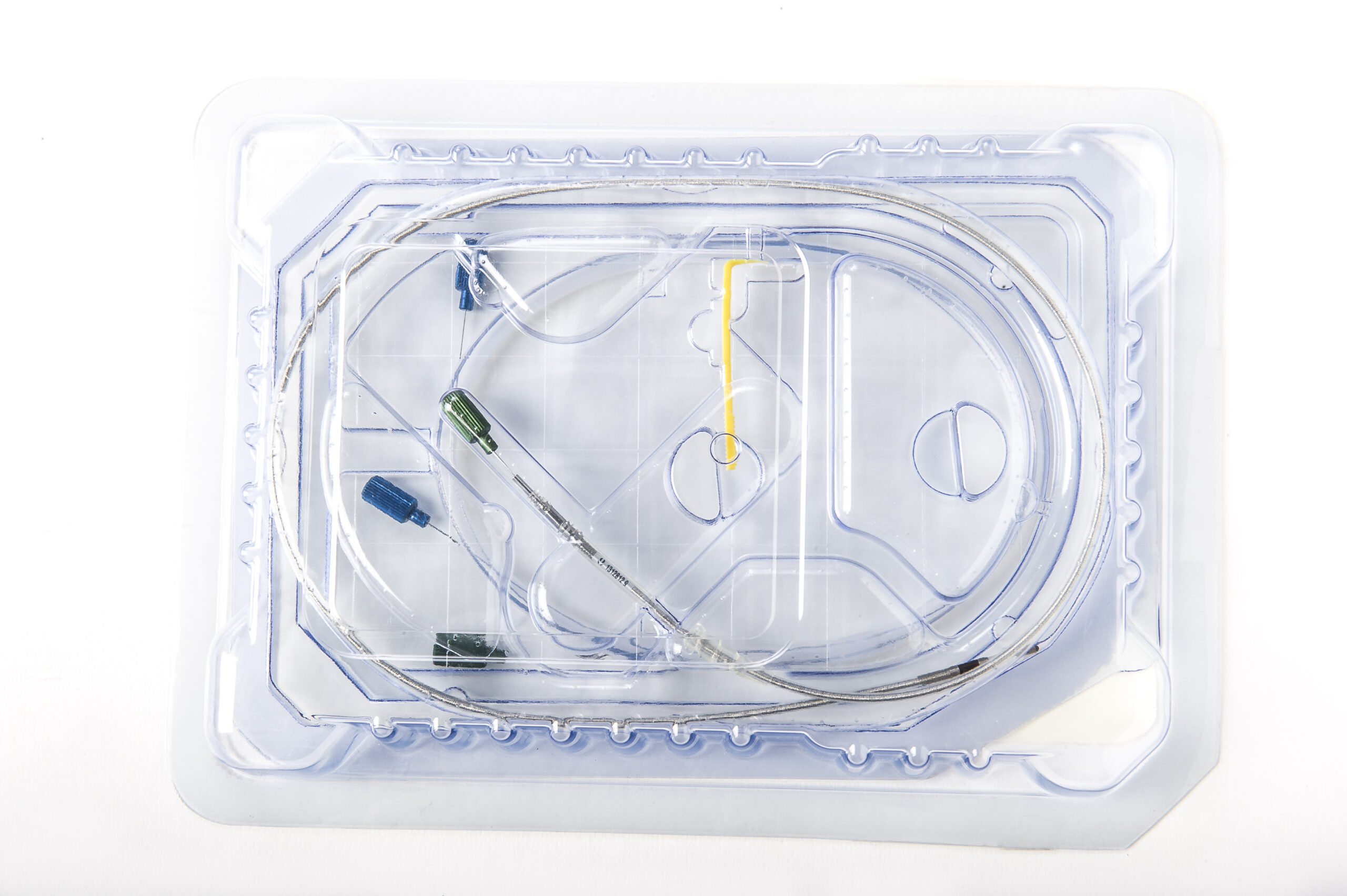
Sensitive neurostimulation products carry a different packaging burden than many standard instruments or accessories. A pouch, tray, carton, or shipper must protect physical components, preserve product integrity, support sterilization, maintain the sterile barrier when sterility is required, and reduce shipping risk before the device reaches a clinical team.
For medical device manufacturers, the stakes are higher when the product includes sensitive electronics, implantable components, thin leads, delicate connectors, or electromechanical assemblies. A package that looks acceptable after sealing may still allow movement, compression, electrostatic discharge exposure, abrasion, or damage during distribution.
This guide explains how OEMs can approach medical device protective packaging for sensitive products, with a focus on protective packaging for sensitive medical devices such as neurostimulation devices, neuromodulation devices, implantable pulse generators, implant leads, and related system components.
Why Sensitive Neurostimulation Devices Need Specialized Packaging
FDA’s classification description for implanted deep brain stimulation systems lists components such as an implantable pulse generator, leads, extensions, a patient programmer, and a charger. That product profile helps explain why generic packaging is rarely enough for this category.
A neurostimulation product may need several protective features working together, including:
- Sterile barrier packaging for implantable devices
- Anti-static protection for external electronics
- Foam cushioning for impact control
- Separated cavities for implant leads, tools, accessories, or documentation
- Secondary cartons or shippers that reduce distribution stress
Diagnostic equipment and diagnostic systems may need another approach, especially when screens, housings, sensors, or electromechanical assemblies can be damaged by compression or electrostatic discharge.
Package design should begin with the device’s real behavior. Does a lead spring out of position? Does a connector press into the lid? Does a heavy component slide during vibration? Does a coated surface show abrasion after contact with plastic materials? These questions matter because small design choices can protect or damage the product.
For OEMs, the goal is not a package that looks safe on a sample table. The goal is a packaging system that keeps the device stable through assembly, inspection, sterilization, storage, shipment, and clinical opening. That means the protective layer, sterile barrier packaging, labeling, carton, and shipper should be reviewed together.
What Protective Packaging Has to Do
Protective packaging has several jobs at the same time.
Protective packaging has to do four things well: protect the device, protect the sterile barrier when one is present, support clinical presentation, and work in production.
- Protect the device: The package should control shock, vibration, compression, abrasion, electrostatic discharge, and component-to-component contact. Sensitive electronics, implant leads, and electromechanical assemblies may need different forms of restraint within the same packaging system.
- Protect the sterile barrier: When the product is sterile, the sterile barrier system maintains sterility, while the surrounding protective packaging reduces the distribution stress placed on that barrier. ISO 11607-1 applies to materials, preformed sterile barrier systems, sterile barrier systems, and packaging systems intended to maintain sterility of terminally sterilized medical devices until the point of use.
- Support clinical presentation: When a clinician opens a sterile tray or removes an accessory from a kit, the product should be easy to identify and remove. Tangled leads, crushed inserts, unclear component placement, or forced handling can create frustration and increase handling risk.
- Support repeatable packout: Operators should be able to load components consistently, confirm placement visually, and close the package without forcing parts into position. A strong design on paper can still fail if it slows the line, causes misloads, or makes inspection difficult.
Common Packaging Risks for Sensitive Devices
Sensitive products often run into predictable packaging problems. The package passes a visual check after sealing, then shows damage after transit simulation. The carton looks strong, but the pallet load shifts. A foam insert holds the device well at first, then compresses after storage. A tray protects the main unit but lets the implant leads rub against a hard surface.
The table below gives OEMs a practical way to connect risk with packaging response.
| Risk | Possible Effect | Packaging Response |
| Shock and drop impact | Cracked housings, damaged connectors, and internal movement | Foam cushioning, foam inserts, and tested tray geometry |
| Vibration | Abrasion, lead stress, product movement | Stabilization materials, controlled cavities, cushioning foams |
| Compression | Carton collapse, tray deformation, sterile barrier stress | Corrugated shipping cartons, load testing, pallet stabilization |
| Electrostatic discharge (ESD) | Damage to sensitive electronics | Anti-static foam, ESD-safe handling, protective bags |
| Mixed-component kits | Component damage, missing items, poor presentation | Custom compartments, labels, and visual inspection points |
| Sterilization exposure | Material changes, adhesive changes, discoloration | Compatible material selection and post-sterilization testing |
Medical equipment packaging should be built around the device’s weak points, not around a standard carton or tray size. A heavy implantable pulse generator may need a different restraint than a lead. A diagnostic unit may need ESD protection and screen protection, while a sterile accessory may need breathable barrier materials and secondary support.
Material Selection for Protective Medical Packaging
Material selection affects cleanliness, durability, sterilization compatibility, cushioning, cost, and validation. For sensitive devices, the packaging material can be as important as the package shape and design.
Common options include medical-grade materials for device-contact or cleanroom-compatible applications, medical-grade paper for breathable sterile barrier configurations, nonwoven materials for lids or wraps, and plastic materials such as PETG, HDPE, or PP for trays, guards, and inserts. Foam cushioning and cushioning foams can help control impact. Foam inserts can separate parts and hold orientation. Anti-static foam may be needed when sensitive electronics are present.
Each material should be reviewed against the device and the process. A foam may cushion well but shed particles. A rigid tray may protect the housing but scuff a coating. A film may provide a strong barrier but limit the selected sterilization method. A paper or nonwoven lid may support sterilization, yet require stronger secondary protection during distribution.
Material selection should also account for the sterilization process. FDA notes that medical devices may be sterilized using moist heat, dry heat, radiation, ethylene oxide gas, vaporized hydrogen peroxide, and other sterilization methods. The FDA also states that ethylene oxide is used to sterilize about 50% of sterile medical devices in the United States.
That point matters for neurostimulation packaging. EtO sterilization may require breathable materials that allow gas penetration and aeration. Gamma sterilization can affect some polymers, adhesives, inks, and coatings. A package that works before sterilization may not perform the same way afterward.
Sterile Barrier Protection and Shipping Risk
Sterile barrier protection depends on a complete packaging system, not the seal alone. The packaging system must survive handling, storage, distribution, and aging. FDA recognizes ISO 11607-1 with Amendment 1:2023 for sterile barrier systems and packaging systems, with ISO 11607-2 and ISO/TS 16775 listed as related support.
For sensitive implants and accessories, teams should look at the full route. A sterile tray inside a carton may need additional stabilization materials if the device is heavy. A pouched lead may need a backer or insert to prevent bending. A kit with several components may need separate cavities so heavier items do not crush lighter parts.
Shipping risk is not limited to small parcel drops. Pallet configuration, load height, stretch wrap, corner boards, mixed loads, and freight route can all affect package performance. ASTM D4169 is commonly used to evaluate shipping units against expected distribution hazards, and the FDA recognizes ASTM D4169-22 in its consensus standards database.
After testing, inspection should go beyond the outer box. Teams should check:
- Device position and evidence of movement
- Foam compression, insert damage, or tray deformation
- Sterile barrier scuffs, punctures, wrinkles, or seal stress
- Label readability and label placement
- Cable position, lead geometry, and connector protection
- Carton condition after compression, vibration, or drop exposure
A carton can look acceptable while the internal package shows movement, abrasion, or sterile barrier stress.
Packaging Validation and Regulatory Compliance
Medical device packaging validation connects design intent with evidence. It helps show that the selected materials, forming or sealing process, sterilization exposure, aging, and distribution route can support the product through its labeled shelf life and use case.
ISO 13485 is the international quality management standard for organizations involved in medical device design, production, installation, servicing, and related services. For packaging teams, ISO 13485 alignment supports supplier control, traceability, process validation, nonconformance handling, and change control.
Validation activities may include sterile barrier integrity testing, seal strength testing, accelerated aging, real-time aging, sterilization compatibility studies, distribution simulation, ESD evaluation, visual inspection criteria, and packout process validation. The exact plan should match the device. A sterile implant kit, an external programmer, and a nonsterile diagnostic unit do not need identical testing plans.
Regulatory standards, ISO standards, and internal quality requirements should be reviewed before the package is finalized. Late packaging changes can affect labeling, sterilization load configuration, material qualification, regulatory compliance, and launch timing.
How OEMs Can Compare Medical Packaging Solutions
A useful comparison starts with the device, then moves outward to the packaging systems that protect it.
OEM teams can make the review more practical by asking:
- Is the product implantable, electronic, coated, flexible, sharp, heavy, or delicate?
- Which components need sterile barrier protection, and which need mechanical or ESD protection?
- Can operators load the package without bending, forcing, touching, or misorienting components?
- Will the package support pilot builds, commercial production, and future design changes?
- Does the shipper match the real distribution route, including parcel, freight, pallet, or mixed-load handling?
- What medical device packaging validation evidence will quality and regulatory teams need before release?
Volume matters as well. A hand-loaded tray may be practical during pilot production. A more automated process may fit later commercial demand. Protective packaging should be able to grow with the program, or the team should know when a redesign may be needed.
The strongest medical packaging decisions often come from early collaboration among engineering, quality, regulatory, operations, supply chain, and the packaging partner. Each group sees a different risk. Engineering may focus on device surfaces and geometry. Quality may focus on validation and inspection. Operations may focus on packout time. Supply chain may focus on lead times, carton cube, and packaging availability.
Conclusion: Build Protection Around the Device
Protective packaging for sensitive medical devices should be based on the risks of the actual product. Neurostimulation and neuromodulation programs may include implantable devices, implant leads, external electronics, diagnostic systems, tools, and accessories. Each component may need a different form of protection.
The right medical device packaging approach protects product integrity, supports the sterilization process, maintains sterile barrier protection when needed, reduces shipping risk, and works in production. It also gives the user a clear, controlled opening experience.
As an ISO 13485-certified contract manufacturing organization with extensive experience packaging and assembling neurostimulation devices, PRO-TECH Design can help design custom medical device packaging, evaluate sterile barrier packaging and choose the appropriate sterilization method, as well as determine compatible packaging materials and validation planning.
Reach out to us to discuss your device, production goals, and protective packaging requirements.
FAQs
Why Is Protective Packaging for Sensitive Medical Devices Different?
Protective packaging for sensitive medical devices must account for mechanical damage, electrostatic discharge, material compatibility, sterile barrier protection, and user handling. Neurostimulation devices, diagnostic equipment, implant leads, and electromechanical assemblies often need more support than simple single-use accessories.
What Materials Are Used for Neurostimulation Device Packaging?
Common materials include foam cushioning, anti-static foam, plastic trays, medical-grade paper, nonwoven materials, protective plastic packaging, medical-grade materials, corrugated shipping cartons, and sterile barrier materials. The best choice depends on device geometry, sensitivity, sterilization method, cleanliness needs, and validation requirements.
Do Neurostimulation Devices Always Need Sterile Barrier Packaging?
No. Implantable medical devices and sterile accessories often need sterile barrier packaging, but external controllers, chargers, programmers, and some diagnostic systems may be packaged as nonsterile products. The package design should match the intended use, labeling, regulatory pathway, and sterilization process.
How Does EtO Sterilization Affect Packaging?
EtO sterilization often requires packaging that allows gas penetration and aeration. Breathable materials such as medical-grade paper or nonwoven materials may be used, depending on the sterile barrier system. Packaging teams should also evaluate how foam, labels, adhesives, and plastic materials behave after exposure.
How Does Gamma Sterilization Affect Packaging?
Gamma sterilization can affect some polymers, adhesives, inks, films, and packaging materials. OEMs should test package strength, appearance, barrier performance, and device compatibility after exposure before finalizing the package.
What Is Included in Medical Device Packaging Validation?
Medical device packaging validation may include seal integrity testing, seal strength testing, accelerated aging, real-time aging, sterilization compatibility testing, distribution simulation, visual inspection criteria, ESD evaluation, and packout process validation.